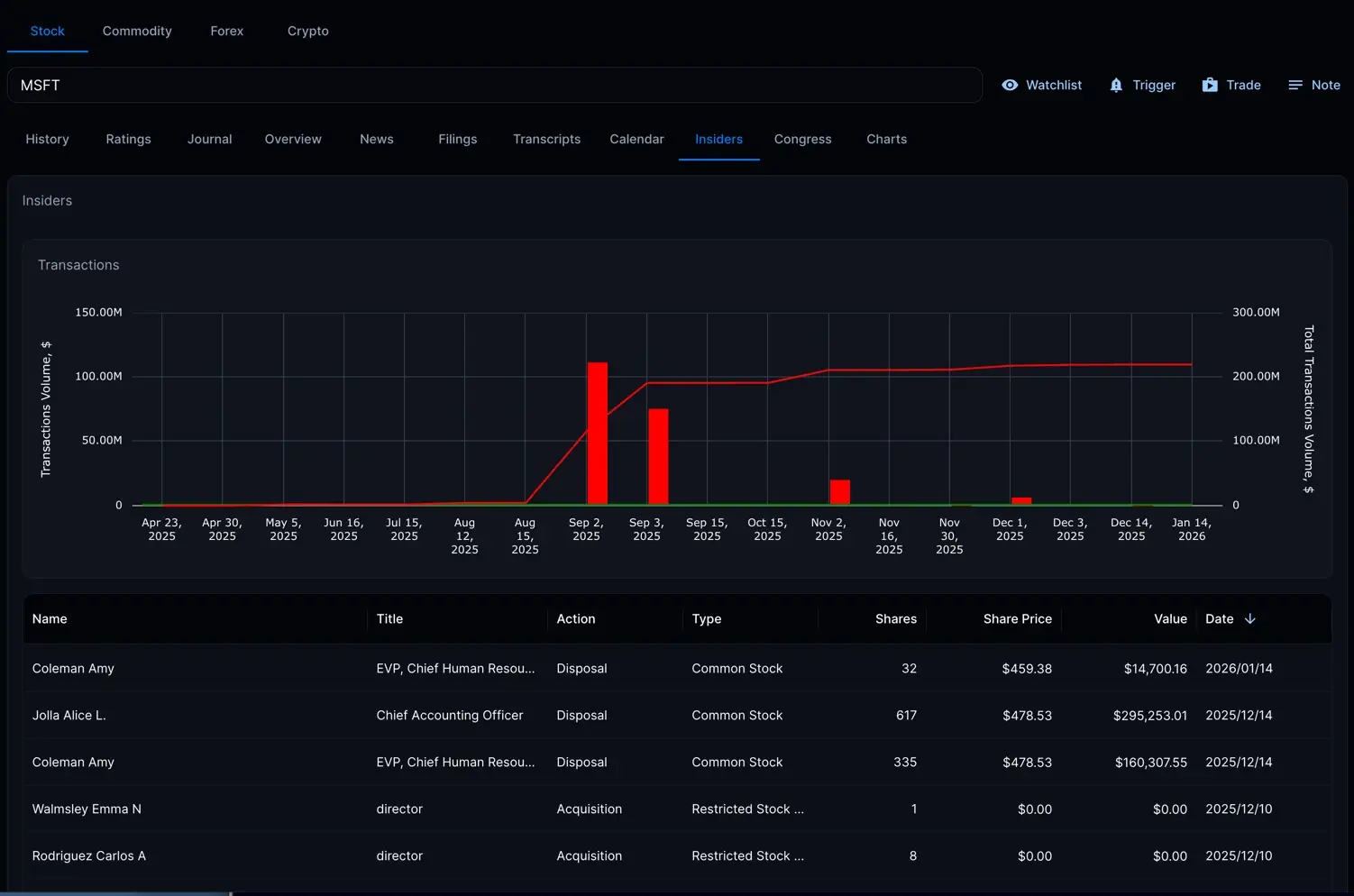
When high-ranking company insiders—such as executives, directors, and significant shareholders buy or sell shares in their own companies, it’s referred to as “insider trading.” These trades are legally required to be reported to the Securities and Exchange Commission (SEC) and are publicly available, allowing investors to track them.
Analyzing insider trades offers unique insights into a company’s sentiment and future outlook, as insiders often have access to detailed internal information that outsiders don’t.
What Are Insider Trades?
Insider trades are transactions by individuals who have access to material non-public information about the company, including CEOs, CFOs, board members, and large shareholders (those who own at least 10% of company shares). Because these individuals are “insiders,” their transactions must comply with strict SEC guidelines, including mandatory disclosure within 2 days of the trade.
This transparency ensures that public investors are aware of insider trading activity, especially when combined with customizable stock alerts.
Types of Insider Trades: Buying vs. Selling
- Insider Buying: When an insider buys shares in their own company, it can be a strong positive signal for investors. Insider buying often indicates that the individual believes the stock is undervalued or that there is confidence in the company’s future performance. Investors can surface these opportunities faster by using a stock screener with custom triggers that flags unusual insider accumulation Consistent insider buying across various price points may be viewed as a strong indicator of the stock’s potential.
- Insider Selling: Insider selling doesn’t always carry the same significance as buying. Insiders may sell shares for various reasons unrelated to company performance, such as personal financial needs, tax obligations, or portfolio diversification. However, heavy or frequent selling across multiple insiders can sometimes signal concern over the company’s outlook, especially if there are no corresponding buys.
How Insider Trading Reflects Stock Sentiment
Insider trades can significantly influence stock sentiment, with insider buying often viewed as a bullish signal and insider selling as either neutral or bearish. For instance:
- Bullish Sentiment: Consistent insider buying, especially by top executives, is often a bullish indicator. Insiders are in the best position to evaluate the company’s long-term potential. Therefore, when they purchase shares, it can signify confidence in future growth or stability.
- Bearish Sentiment: If multiple insiders are selling large quantities of stock, investors may see it as a negative sign. However, as selling can have various motivations, context is crucial—one-time sales or sales that coincide with broader industry downturns may not necessarily indicate trouble within the company itself.
Factors to Consider When Evaluating Insider Trades
- Quantity of Shares: The volume of shares insiders buy or sell is a major indicator. Large transactions suggest greater confidence or concern than small trades.
- Timing: Insider trades can be significant, especially when they precede major corporate announcements, earnings reports, or industry shifts.
- Consistency: Continuous buying or selling by multiple insiders can be more telling than a single transaction. A pattern of insider buying indicates longer-term confidence, while continuous selling may raise red flags if there are no counterbalancing purchases.
- Industry Trends: If insider buying is prevalent across multiple companies within an industry, it may reflect broader sector confidence rather than company-specific sentiment.
Tracking Insider Trades for Investment Decisions
Many investors monitor insider trading data as part of their due diligence. Platforms like Finbotica make it easy to track insider buying and selling trends, allowing investors to gain insights into potential value signals or risks in their investments.
To stay consistent and refine decision-making over time, investors can use a smart investment journal to document trades and insights.
Remember that insider trades should be one piece of a holistic analysis, complementing other research areas like earnings, industry trends, and financial ratios.
The Bottom Line
Insider trading activity provides a valuable window into stock sentiment, offering unique insights that go beyond financial reports.
For investors, understanding the nuances of insider trades, why they happen, when they occur, and how they align with broader trends can enhance portfolio decision-making and potentially lead to better investment outcomes.